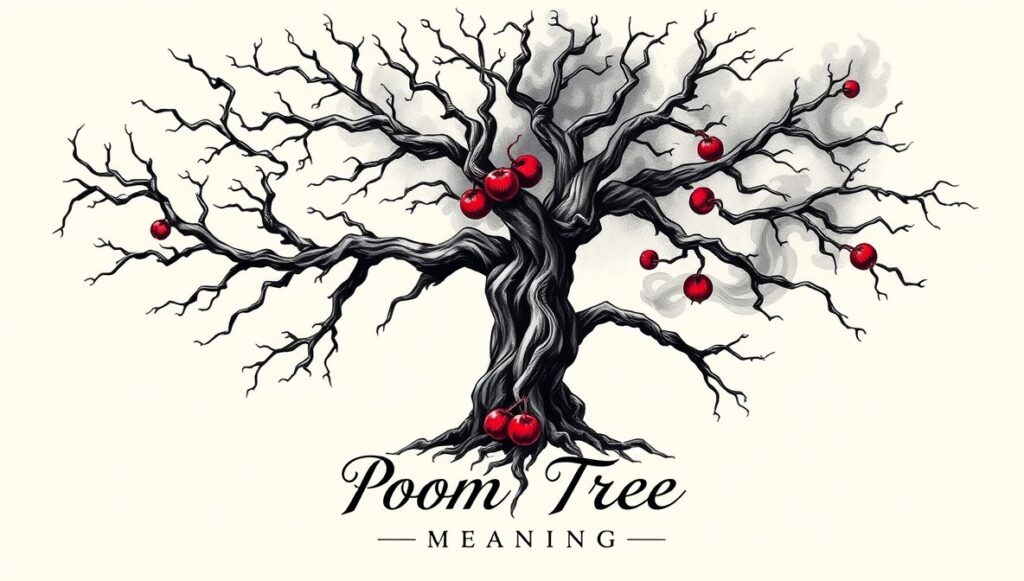
The poison tree tattoo meaning is commonly associated with hidden anger, emotional pain, betrayal, resentment, and the consequences of allowing negative feelings to grow. Inspired partly by William Blake’s poem A Poison Tree, this tattoo can also represent personal growth, emotional awareness, inner darkness, and the decision to break free from toxic relationships.
Poison Tree Tattoo Meaning & Definition
A poison tree tattoo is a symbolic design that represents the emotions and experiences people may struggle to express openly. Its meaning often connects to anger, bitterness, secrets, revenge, and the long-term effects of unresolved conflict.
Unlike ordinary tree tattoos, which frequently symbolize life, stability, family, and personal growth, a poison tree tattoo explores a darker side of human nature. It reminds people that emotions can develop in harmful ways when they are hidden, ignored, or allowed to control their actions.
The meaning depends on the design and the person wearing it. For one individual, it may represent betrayal by someone they trusted. For another, it may symbolize a difficult period in life and the lessons learned from it.
Common interpretations include:
- Hidden anger: Feelings that remain unspoken and gradually become stronger.
- Betrayal: The pain of being deceived by someone close.
- Toxic relationships: Connections that appear attractive but cause emotional harm.
- Revenge: The desire to respond to wrongdoing, sometimes with destructive consequences.
- Emotional healing: Recognizing harmful feelings and choosing to move forward.
- Inner darkness: Accepting difficult emotions as part of the human experience.
- Personal transformation: Learning from painful experiences and becoming more self-aware.
The poison tree tattoo is not necessarily a symbol of hatred or negativity. It can also serve as a reminder that recognizing difficult emotions is the first step toward managing them in a healthier way.
Introduction
A tree usually represents strength, life, and connection to the world around us. But what happens when the tree becomes poisonous?
The image immediately creates a different impression. Instead of offering shelter or fruit, the tree may represent something dangerous growing beneath a beautiful surface. Its branches can look peaceful, its fruit can appear tempting, and its roots can remain hidden underground. Yet the entire image suggests that appearances do not always reveal the truth.
That contrast is one reason the poison tree tattoo has such a powerful symbolic appeal.
People who choose this design may want to express a personal experience that cannot easily be explained through words. It might reflect a friendship that ended badly, a period of suppressed anger, or the realization that an unhealthy situation had been affecting their lives for years.
The design can also have a literary meaning. William Blake’s 1794 poem A Poison Tree, published in his collection Songs of Experience, explores what can happen when anger toward another person is concealed instead of communicated. The poem uses a growing tree and its fruit to illustrate the development and consequences of resentment.
Although the poem is an important source of inspiration, not every poison tree tattoo is a direct reference to Blake. Some people simply connect with the imagery of a beautiful but dangerous tree.
Understanding the symbolism can help you decide whether this tattoo reflects your personality, experiences, beliefs, or artistic preferences.
Origin of the Poison Tree Tattoo
The poison tree tattoo does not have one universally established origin. Its modern symbolism is strongly connected to literature, dark botanical imagery, and personal interpretations of emotional conflict.
William Blake’s Poem A Poison Tree
One of the best-known influences is William Blake’s poem A Poison Tree, written in the late eighteenth century and published in 1794.
The poem compares two emotional experiences: anger toward a friend that is openly expressed and anger toward a foe that is concealed. In the second situation, the speaker allows resentment to grow through fear, deception, and emotional suppression.
The growing tree becomes a metaphor for that resentment. Its fruit represents the eventual consequences of allowing hostility to develop unchecked.
This literary connection gives the tattoo a meaning beyond its appearance. The tree is not simply a plant associated with poison. It represents a process in which an emotion grows, changes, and eventually affects others.
For readers familiar with Blake’s work, the tattoo can symbolize the dangers of concealed anger and the importance of honest communication.
Read This Butterfly Tattoo Meaning: Symbolism, Designs, and Hidden Messages
Dark Botanical Art and Gothic Symbolism
Another influence comes from gothic art, dark illustration, and botanical tattoo styles.
Traditional tree tattoos often emphasize strong trunks, green leaves, and healthy branches. Dark botanical designs may instead feature twisted roots, bare limbs, black leaves, thorny branches, or unusual fruit.
These elements create a mysterious appearance and allow the artist to communicate ideas such as danger, mortality, secrecy, and emotional struggle.
However, there is no single historical tattoo tradition that defines the poison tree symbol. Its meaning can combine literary references with contemporary tattoo art and individual experiences.
Personal Experiences as Inspiration
For many people, the meaning is personal rather than historical.
Someone who has experienced betrayal may view the tree as a symbol of broken trust. Someone recovering from a destructive relationship may interpret it as a reminder to recognize warning signs. Another person may use it to represent the decision to stop allowing anger to influence their behavior.
The same design can therefore express pain, accountability, resilience, or a combination of these ideas.
Popularity of Poison Tree Tattoos
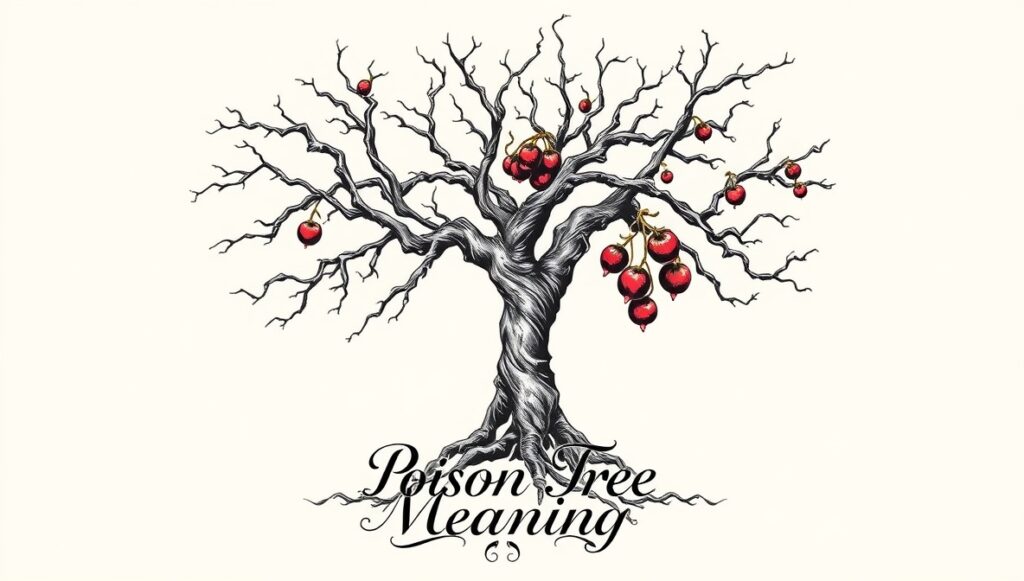
Poison tree tattoos fit naturally into several popular artistic styles, including gothic tattoos, dark nature designs, blackwork, fine-line illustrations, and literary tattoos.
Their appeal comes partly from the contrast between beauty and danger. A tree with delicate branches and dark fruit can look elegant while communicating a complicated message.
Several factors make this design attractive to people who prefer symbolic body art.
- Deep symbolism: The design can represent emotions and experiences that are difficult to explain.
- Literary connections: Readers can use the tattoo to express an appreciation for William Blake and poetic symbolism.
- Visual flexibility: The design can range from a small, minimal tree to a detailed composition with roots, fruit, and surrounding scenery.
- Personal interpretation: It does not require the wearer to follow one fixed meaning.
- Dark aesthetic: Black ink, twisted branches, and poisonous-looking fruit create a distinctive gothic appearance.
- Meaningful storytelling: Each part of the design can represent a different stage of a personal experience.
The poison tree is a relatively specific symbolic design, so its popularity should not be confused with that of tree tattoos in general. Its exact prevalence is difficult to establish, and interpretations vary among tattoo artists and wearers.
Ultimately, the design’s appeal lies in its ability to combine striking imagery with a personal story.
How the Poison Tree Tattoo Is Used
A poison tree tattoo can communicate different messages depending on its visual elements, placement, and the meaning assigned by its wearer.
As a Symbol of Hidden Anger
Some people choose the design to represent anger that was never expressed openly.
The tree’s growth reflects how unresolved feelings can become stronger over time. Its roots may symbolize the source of the anger, while its branches represent the ways that emotion spreads into other parts of life.
For these wearers, the tattoo may serve as a reminder to address difficult feelings rather than allowing them to control future decisions.
As a Reminder of Betrayal
A poison tree bearing dark fruit can represent the painful consequences of misplaced trust.
The fruit may appear attractive, yet its poisonous nature suggests that something that once seemed safe eventually caused harm.
This interpretation can apply to romantic relationships, friendships, family conflicts, or professional situations.
It does not necessarily mean that the wearer wants revenge. The tattoo may simply acknowledge a painful experience and the lessons that came from it.
As a Representation of Toxic Relationships
The tree can also symbolize a relationship that looked healthy on the surface but became damaging over time.
The roots may represent the beginning of the relationship, the branches its growing influence, and the fruit its eventual consequences.
Some people use this imagery to mark the point at which they recognized an unhealthy pattern and decided to protect their emotional well-being.
As a Symbol of Personal Growth
Although the imagery is dark, the meaning does not have to be pessimistic.
A poison tree tattoo can represent the decision to learn from mistakes, recognize harmful patterns, and become more emotionally aware.
A design featuring new growth beside a dead or twisted tree can communicate the idea of leaving destructive habits behind.
As a Literary Tattoo
For admirers of William Blake, the tattoo may serve as a visual interpretation of A Poison Tree.
The design might include a small tree with a single piece of fruit, an illustrated page, or a subtle quotation from the poem.
This approach is especially meaningful for people who appreciate poetry, Romantic literature, or the relationship between art and human psychology.
Poison Tree Tattoo Examples
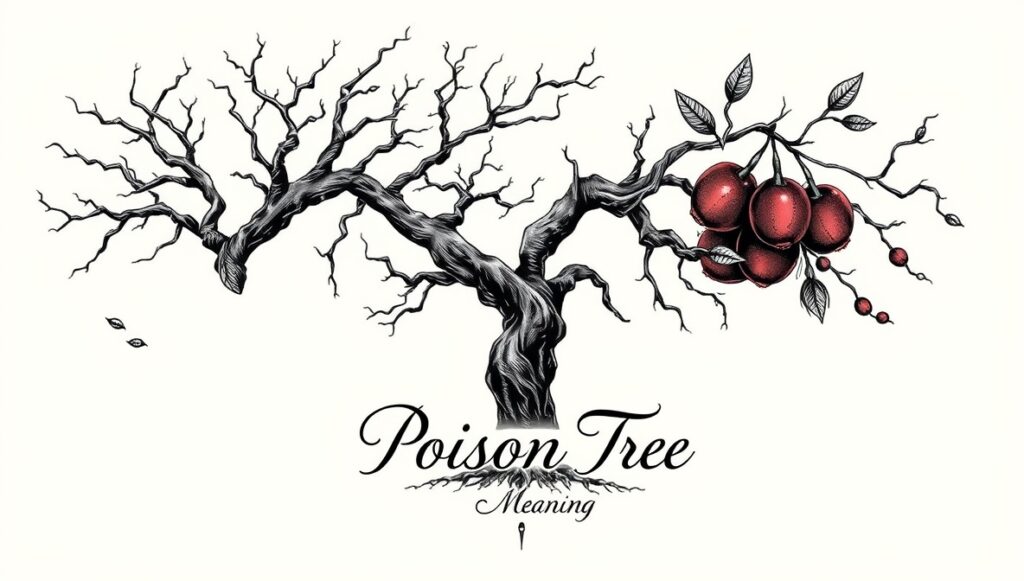
The appearance of a poison tree tattoo can change its emotional tone. Some designs look threatening and dramatic, while others feel reflective or almost peaceful.
Friendly and Positive Interpretations
Even a dark design can communicate a constructive message.
Example 1: A tree with new leaves
A twisted tree with fresh leaves growing from one branch may symbolize recovery after a difficult experience.
Meaning: Healing, self-awareness, and the possibility of change.
Example 2: A tree with broken chains around its roots
The broken chains represent freedom from an unhealthy attachment or a destructive emotional pattern.
Meaning: Independence and moving forward.
Example 3: A poison tree surrounded by flowers
The contrast between the tree and the flowers can represent the coexistence of painful experiences and positive growth.
Meaning: Accepting the past without allowing it to define the future.
Dark and Emotional Interpretations
Example 1: A bare tree with twisted branches
This design emphasizes loneliness, unresolved conflict, and emotional exhaustion.
Meaning: A difficult chapter in life or a struggle with suppressed emotions.
Example 2: A black tree bearing one poisonous fruit
The fruit becomes the focal point of the tattoo, suggesting that hidden resentment may eventually produce harmful consequences.
Meaning: Betrayal, temptation, or the consequences of concealed anger.
Example 3: A tree with exposed roots
Exposed roots draw attention to the origins of painful feelings or long-standing conflict.
Meaning: Understanding the source of emotional struggles.
These meanings are interpretations rather than universal definitions. The wearer ultimately decides what the design represents.
Funny or Ironic Interpretations
A poison tree tattoo is usually associated with serious themes, but some people prefer dark humor.
For example, a small tree with exaggerated fruit might represent the idea of learning life’s lessons the hard way. A cartoon-style poisonous apple could make the design feel playful rather than threatening.
Such designs can communicate irony, sarcasm, or a preference for unusual artwork.
However, a humorous version may not communicate the same emotional depth as a design inspired by Blake’s poem.
Poison Tree Tattoo Designs and Their Meanings
Choosing the right visual details can make the tattoo more personal and expressive.
| Tattoo design | Common symbolic interpretation | Overall style |
|---|---|---|
| Bare poison tree | Loss, loneliness, or suppressed anger | Minimalist or dark |
| Tree with poisonous fruit | Temptation, betrayal, or harmful consequences | Gothic |
| Twisted tree roots | Deep emotional struggles or hidden causes | Detailed blackwork |
| Black tree silhouette | Mystery, grief, or inner darkness | Simple and dramatic |
| Tree with a snake | Deception, temptation, or danger | Gothic and symbolic |
| Tree with broken branches | Conflict, damage, or a painful past | Emotional |
| Poison tree with flowers | Pain alongside healing and renewal | Contrasting and reflective |
| Tree with a falling fruit | Consequences, realization, or change | Narrative |
| Tree with an exposed heart | Vulnerability, emotional pain, or complicated love | Personal and expressive |
| Tree inspired by a poem | Literary appreciation and reflection | Artistic |
These associations are flexible. A snake, for example, can represent wisdom or transformation in some traditions rather than deception. The meaning depends on the wearer’s intentions and the cultural context.
Comparison with Similar Tattoo Symbols
The poison tree tattoo shares themes with several other designs, but each symbol can communicate a slightly different message.
| Tattoo symbol | Main meaning | Difference from a poison tree |
|---|---|---|
| Tree of life | Connection, family, stability, and growth | Generally emphasizes life and interconnectedness |
| Dead tree | Loss, endings, hardship, or renewal | Does not necessarily imply poison or hidden anger |
| Poison apple | Temptation, deception, or danger | Focuses on a tempting object rather than emotional growth |
| Snake tattoo | Transformation, danger, wisdom, or rebirth | Meaning varies widely by culture and design |
| Black rose | Grief, mystery, endings, or remembrance | Usually emphasizes beauty, loss, or mourning |
| Weeping willow | Sadness, resilience, remembrance, or flexibility | Often communicates sorrow without implying toxicity |
| Thorny tree | Protection, suffering, or difficult experiences | Emphasizes pain and defense rather than concealed resentment |
| Burning tree | Destruction, change, or rebirth | Focuses on an intense event or transformation |
Poison Tree vs. Tree of Life
A tree of life tattoo commonly celebrates connection, family, personal development, and the cycle of existence.
A poison tree tattoo explores a darker side of growth. It can suggest that emotions, habits, or relationships may develop in harmful directions when left unchecked.
The two designs can even be combined to show the difference between healthy and unhealthy growth.
Poison Tree vs. Poison Apple
A poison apple usually emphasizes temptation, deception, and the danger hidden beneath an attractive appearance.
A poison tree adds another layer of meaning because it shows where the fruit comes from and how it develops.
In a literary interpretation, the tree may represent the gradual growth of anger, while the fruit symbolizes the consequences of that anger.
Read This Semicolon Tattoo Meaning: Hope, Healing, and a Reason to Keep Going
Poison Tree vs. Dead Tree
A dead tree can symbolize grief, endings, emotional exhaustion, or the closing of one chapter of life.
A poison tree may carry similar themes but more directly suggests toxicity, suppressed resentment, or destructive consequences.
A dead tree can simply represent loss. A poison tree often implies that something harmful has grown or developed.
Alternate Meanings of a Poison Tree Tattoo
Not every poison tree tattoo represents anger or betrayal. The same image can express several other ideas.
1. Emotional self-awareness: The tree may remind the wearer to recognize anger and frustration before those emotions influence their actions.
2. The consequences of silence: The tattoo can symbolize situations in which avoiding an honest conversation allowed a problem to grow.
3. Temptation and deception: Poisonous fruit may represent something that appears desirable but eventually causes harm.
4. Moral complexity: The design may acknowledge that people are capable of both kindness and destructive behavior.
5. Accountability: Rather than blaming others, the wearer may use the tree to remember the consequences of their own decisions.
6. Survival after hardship: A damaged tree that continues to grow can represent resilience after a painful experience.
7. Literary appreciation: The tattoo may primarily reflect an interest in William Blake, poetry, or symbolic art.
8. A dark aesthetic: Some people choose the design because they appreciate gothic imagery, without assigning it a specific personal story.
The best interpretation is the one that reflects the wearer’s intention rather than an assumption made by someone viewing the tattoo.
Professional or Polite Ways to Explain a Poison Tree Tattoo
If someone asks about your tattoo, you do not have to share personal details. You can explain its meaning in a simple, thoughtful way.
| Situation | Possible explanation |
|---|---|
| Casual conversation | “It represents learning from difficult experiences.” |
| Friendly discussion | “I like the idea that even painful experiences can teach us something.” |
| Literary conversation | “It’s inspired by William Blake’s poem A Poison Tree.” |
| Professional setting | “It’s a symbolic design about self-awareness and the consequences of unresolved emotions.” |
| Personal but private | “It has a personal meaning that reminds me of an important lesson.” |
| Dark artistic interpretation | “I like the contrast between something beautiful and something potentially harmful.” |
| Healing and growth | “It reminds me not to let negative experiences control my future.” |
These explanations allow you to discuss the tattoo without making the conversation uncomfortable.
A professional explanation does not need to sound formal or complicated. The goal is to communicate the meaning clearly while sharing only what feels appropriate.
Common Mistakes About Poison Tree Tattoo Meaning
Several misunderstandings can arise when people interpret symbolic tattoos.
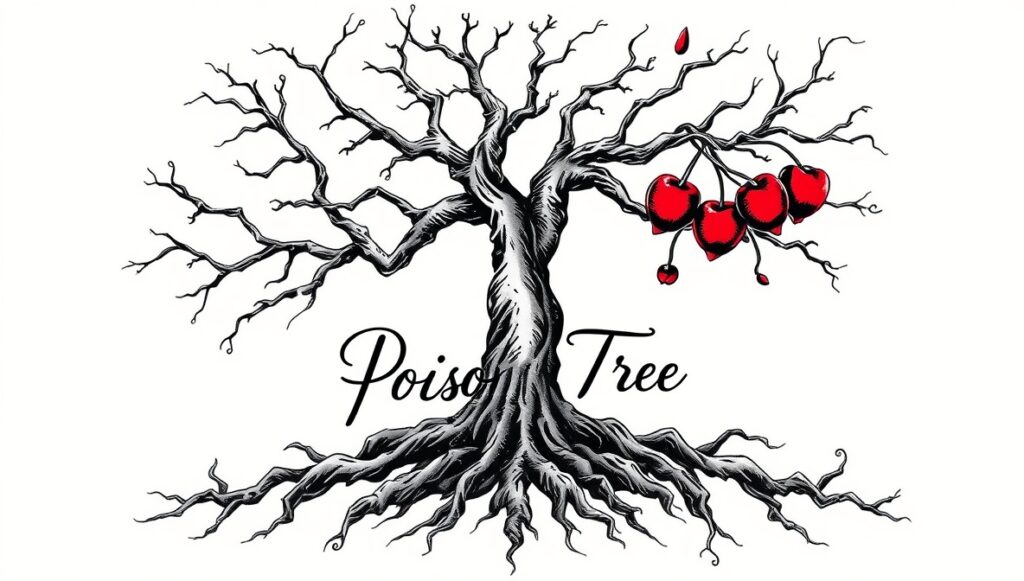
Assuming It Always Represents Revenge
Revenge is one possible interpretation, particularly when the design references Blake’s poem. However, a poison tree tattoo can also symbolize healing, reflection, or the decision to avoid destructive behavior.
The design alone cannot reveal someone’s intentions.
Confusing It With a General Tree Tattoo
A regular tree tattoo often symbolizes family, strength, growth, or stability. A poison tree design usually introduces a darker theme, such as toxicity or harmful consequences.
Although both use tree imagery, their symbolic emphasis may be different.
Believing the Tattoo Has One Official Meaning
There is no universal definition that applies to every poison tree tattoo.
The design may have a literary meaning, a personal meaning, an aesthetic purpose, or a combination of all three.
Assuming It Must Represent a Specific Person
Some people associate the tattoo with a former partner, a difficult friendship, or a family conflict. Others choose it because they relate to its broader message.
It is best not to assume that a tattoo reveals someone’s relationship history.
Ignoring the Importance of Design Details
A tree with poisonous fruit may suggest temptation, while a damaged tree with fresh leaves may communicate resilience.
The visual elements influence how people interpret the tattoo, so it is worth considering the overall composition rather than focusing only on the name.
Treating Dark Symbolism as Proof of Negative Intent
Dark art often explores difficult emotions and complex human experiences. Choosing a dark tattoo does not automatically mean someone is angry, dangerous, or interested in revenge.
Artwork can be a way of reflecting on challenging subjects without endorsing harmful behavior.
Quick Tips Before Choosing a Poison Tree Tattoo
If you are considering this design, think about what you want it to communicate.
- Decide on your main message. Choose whether the tattoo represents betrayal, emotional awareness, personal growth, literature, or another idea.
- Select meaningful details. Fruit, roots, thorns, flowers, and broken branches can all contribute to the design.
- Choose an artistic style. Fine-line work can feel delicate, while blackwork and gothic illustration create a darker appearance.
- Think about size and placement. Small designs can work on the forearm or ankle, while larger compositions may suit the upper arm, back, or thigh.
- Consider long-term readability. Very small details may become less distinct as a tattoo ages, so discuss the design with an experienced tattoo artist.
- Avoid copying a design without understanding it. If the tattoo is inspired by Blake’s poem, reading the poem can help you decide whether its message fits your intentions.
- Give yourself time to decide. A meaningful tattoo should reflect your own preferences rather than a temporary reaction to a difficult situation.
- Prioritize safe tattooing. Choose a reputable professional who follows appropriate hygiene practices and provides clear aftercare instructions.
A thoughtful design does not need to include every symbolic element. Sometimes a simple tree with one dark fruit communicates the message more effectively than a complicated composition.
FAQ About Poison Tree Tattoo Meaning
1. What does a poison tree tattoo mean?
A poison tree tattoo commonly represents hidden anger, resentment, betrayal, toxic relationships, and the consequences of unresolved emotions. It can also symbolize self-awareness, healing, and learning from difficult experiences. Its exact meaning depends on the design and the person wearing it.
2. Is a poison tree tattoo connected to William Blake?
Yes. The design is often associated with William Blake’s poem A Poison Tree, published in 1794 in Songs of Experience. The poem explores how concealed anger can grow and lead to destructive consequences. However, not every poison tree tattoo is inspired directly by the poem.
3. Does a poison tree tattoo symbolize anger?
Anger is one of its central interpretations, especially when the tattoo references Blake’s poem. The tree can represent resentment that develops over time when feelings remain unexpressed. Some wearers use it as a reminder to communicate honestly and manage difficult emotions.
4. What does a poison tree tattoo mean in a relationship?
In a relationship, the tattoo may symbolize betrayal, emotional manipulation, resentment, or a connection that became harmful over time. It may also represent the lessons someone learned from an unhealthy relationship. However, the design does not automatically refer to a romantic partner or a specific person.
5. Is a poison tree tattoo a negative symbol?
Not necessarily. Although the imagery is dark, the tattoo can communicate personal growth, accountability, emotional awareness, and resilience. Some people use it to acknowledge painful experiences while reminding themselves not to repeat harmful patterns.
6. What does a poison tree with fruit symbolize?
Poisonous fruit often represents temptation, deception, hidden danger, or the consequences of resentment. In the context of Blake’s poem, the fruit is particularly associated with the outcome of anger that has been allowed to grow. Other interpretations depend on the design.
7. Where is the best place to get a poison tree tattoo?
Popular placement options include the forearm, upper arm, shoulder, back, calf, and thigh. A small, simple tree may work well in a limited space, while a design with detailed roots and branches may benefit from a larger area. The best placement depends on the artwork, personal preference, and advice from a professional tattoo artist.
8. What is the difference between a poison tree tattoo and a dead tree tattoo?
A dead tree tattoo often represents loss, grief, endings, or resilience. A poison tree tattoo more commonly suggests toxicity, hidden anger, temptation, or harmful consequences. Both can represent difficult experiences, but the poison tree generally emphasizes something destructive that develops or spreads.
9. Can a poison tree tattoo represent healing?
Yes. A poison tree can symbolize healing when its meaning focuses on recognizing harmful emotions, understanding past mistakes, and making healthier choices. Elements such as new leaves, flowers, or broken chains can reinforce the idea of renewal and freedom from destructive patterns.
10. Is a poison tree tattoo always inspired by the poem?
No. William Blake’s poem is an important literary reference, but people may choose the design for its gothic appearance, botanical symbolism, or personal significance. The tree’s meaning can be entirely individual and does not have to follow one literary interpretation.
Conclusion
The poison tree tattoo meaning goes beyond its dark and unusual appearance. It can represent hidden anger, betrayal, resentment, toxic relationships, temptation, and the consequences of allowing harmful emotions to grow. Inspired in part by William Blake’s poem A Poison Tree, the design offers a powerful way to explore the relationship between feelings, choices, and their eventual outcomes.
At the same time, the tattoo does not have to represent negativity. For some people, it serves as a reminder to recognize unhealthy patterns, communicate honestly, accept responsibility, and grow beyond painful experiences.
The details you choose can make the design more personal. Dark fruit may emphasize temptation, exposed roots may suggest the source of emotional struggles, and fresh leaves may communicate healing or renewal.
If you are considering a poison tree tattoo, think carefully about the message you want it to carry. Whether your inspiration comes from literature, personal experience, or dark botanical art, the most meaningful design is one that reflects your own story.