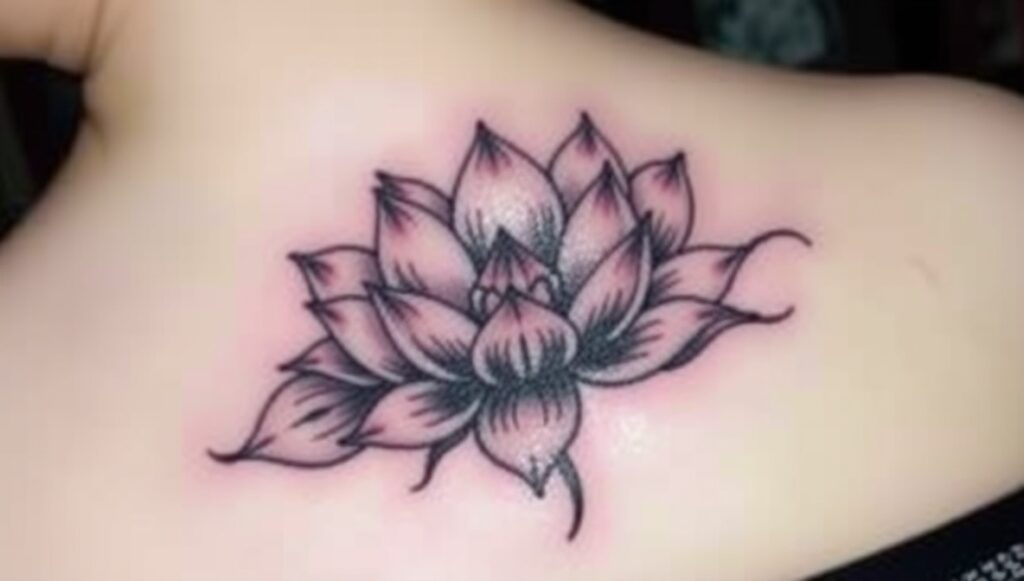
The lotus flower tattoo meaning is commonly associated with spiritual growth, purity, resilience, rebirth, and personal transformation. Because the lotus grows from muddy water and rises above the surface to bloom, it often symbolizes the ability to overcome challenges and emerge stronger, wiser, and more confident.
Lotus Flower Tattoo Meaning & Definition
A lotus flower tattoo is a symbolic design that represents growth, inner peace, spiritual awakening, and the ability to rise above difficult circumstances. Its meaning is influenced by the flower’s natural growth pattern and its important place in several Asian religious and cultural traditions.
The lotus grows in muddy or murky water, yet its flower rises above the surface and opens into a beautiful bloom. This natural process makes it a powerful metaphor for people who have experienced hardship and want to celebrate their progress.
For some people, a lotus tattoo represents a spiritual journey. For others, it serves as a reminder of recovery, self-love, emotional balance, or a fresh start.
The most common lotus flower tattoo meanings include:
- Spiritual awakening: Becoming more aware of yourself, your beliefs, and your place in the world.
- Purity: Maintaining good intentions and inner clarity despite challenging surroundings.
- Resilience: Finding the strength to continue through difficult periods.
- Rebirth and renewal: Beginning a new chapter after a major life change.
- Inner peace: Seeking calmness, balance, and emotional stability.
- Personal transformation: Recognizing how past experiences have contributed to personal growth.
- Beauty and perseverance: Appreciating the strength it takes to flourish under difficult conditions.
The lotus flower does not have one universal meaning. Its symbolism can differ across Buddhist, Hindu, and other cultural contexts, while modern tattoo wearers may attach their own personal experiences to the design.
Introduction
A flower can represent far more than beauty, and the lotus is one of the clearest examples. Rising from muddy water before opening into an elegant bloom, the lotus has become a powerful symbol of transformation, resilience, and spiritual development.
That symbolism explains why the lotus flower tattoo remains appealing to people who want their body art to reflect something meaningful about their lives.
Someone who has overcome a difficult period might choose a lotus to celebrate a fresh start. Another person might connect it with meditation, mindfulness, or a deeper understanding of their spiritual beliefs. Others simply appreciate its graceful petals and the sense of calm it brings to a tattoo design.
Unlike a tattoo chosen only for its appearance, a lotus flower can tell a personal story. Its roots may represent a challenging past, its stem the journey forward, and its open petals the possibility of growth.
However, the flower also carries cultural and religious significance that deserves attention. The lotus appears in Buddhist and Hindu traditions, where it can represent spiritual development, purity, divine association, and enlightenment.
Understanding the lotus flower tattoo meaning involves exploring these historical associations, the different colors and designs, and the ways people interpret the symbol today.
Origin of the Lotus Flower Tattoo
The lotus has a long history in Asian art, religious traditions, and symbolic imagery. Its meaning developed long before modern tattoo culture, making it a symbol with cultural depth as well as visual appeal.
Lotus Symbolism in Buddhism
In Buddhist traditions, the lotus is strongly associated with purity, spiritual development, and enlightenment. Its growth from muddy water is often used to illustrate the possibility of developing wisdom and compassion despite the difficulties of ordinary life.
The flower can represent the journey toward awakening: a person gradually developing greater understanding while moving beyond ignorance and attachment.
The lotus is also associated with Buddhist figures and imagery. For example, depictions of the Buddha and bodhisattvas sometimes show them seated or standing on lotus flowers.
For someone who practices Buddhism, a lotus tattoo may therefore express a personal spiritual commitment. However, the symbol’s precise significance depends on the wearer’s tradition and understanding.
Read This Butterfly Tattoo Meaning: Symbolism, Designs, and Hidden Messages
Lotus Symbolism in Hinduism
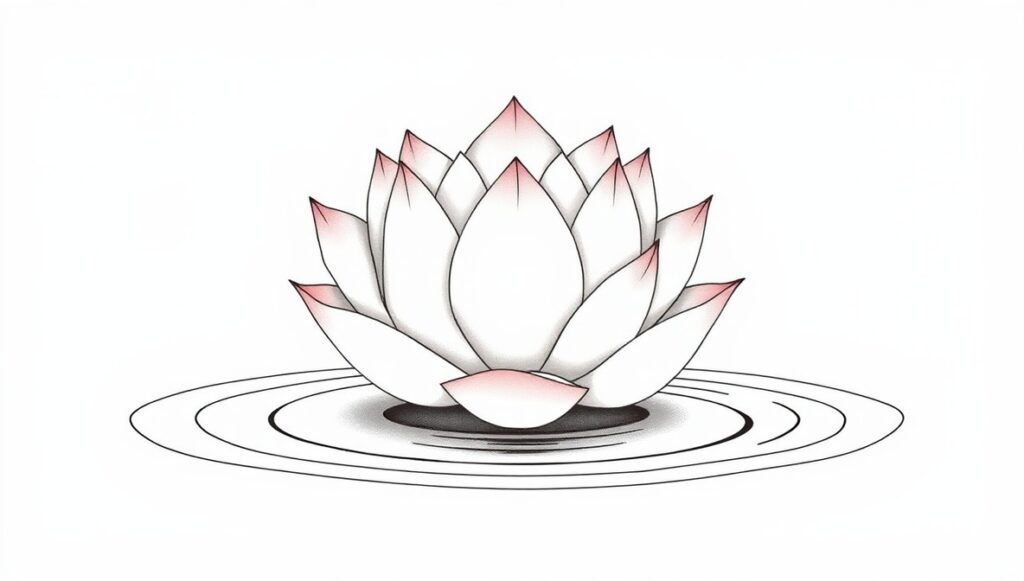
In Hindu traditions, the lotus is associated with divinity, beauty, spiritual purity, and creation. Several Hindu deities are depicted with lotus flowers or seated on lotus thrones.
The flower is especially associated with Lakshmi, the goddess of prosperity and abundance, and appears in imagery connected with other deities, including Brahma.
The lotus can also express the ideal of remaining spiritually grounded while living in the material world. Its beauty and position above muddy water provide a meaningful image of maintaining inner integrity amid everyday challenges.
A lotus tattoo inspired by Hindu symbolism may reflect devotion, spiritual aspiration, prosperity, or a connection with a particular deity.
Lotus Symbolism Beyond Religious Traditions
Lotus imagery has appeared in many historical cultures, including ancient Egypt, where lotus-like water lilies were associated with creation, rebirth, and the sun in religious art and mythology.
It is important to distinguish the different plants and cultural traditions involved. The sacred lotus of Asian traditions and the water lilies represented in ancient Egyptian art are not always botanically identical.
In contemporary tattoo culture, the lotus has also developed broader personal meanings. People may choose it to mark recovery, celebrate a new beginning, or remember an experience that changed their outlook on life.
Its modern popularity reflects both its visual elegance and its longstanding association with renewal.
Popularity of Lotus Flower Tattoos
Lotus flower tattoos are popular because they can combine meaningful symbolism with a wide range of artistic styles. The design works as a small, delicate tattoo or as a detailed centerpiece in a larger composition.
Unlike some symbols that require many details to communicate their meaning, a lotus is recognizable through its layered petals and balanced shape.
Why People Choose Lotus Flower Tattoos
1. A symbol of overcoming hardship
The lotus’s growth in muddy water makes it an appealing choice for people who have experienced difficult circumstances. It can represent the belief that a challenging past does not determine the future.
2. A reminder of personal growth
A lotus tattoo may commemorate a new stage of life, such as completing a difficult goal, leaving an unhealthy situation, or developing greater confidence.
3. A connection with spirituality
For some wearers, the lotus represents meditation, mindfulness, religious devotion, or a commitment to developing wisdom and compassion.
4. A symbol of calmness and balance
Its symmetrical petals and graceful appearance can communicate serenity. People interested in mindfulness or a more balanced lifestyle may find this symbolism especially meaningful.
5. A versatile artistic design
The lotus works well in fine-line, geometric, minimalist, watercolor, and traditional tattoo styles. Artists can emphasize its natural beauty or incorporate additional symbolism.
Popular Lotus Tattoo Placements
| Placement | Why people choose it |
|---|---|
| Wrist | A small, visible reminder of personal growth |
| Forearm | A practical area for detailed petals and vertical designs |
| Shoulder | Suitable for medium or larger floral artwork |
| Back | Provides space for symmetrical, elaborate compositions |
| Ankle | Works well for delicate and minimalist lotus designs |
| Spine | Creates an elegant vertical arrangement |
| Chest | Can represent a deeply personal or spiritual connection |
| Behind the ear | Suitable for a small, understated design |
Placement does not have a universal symbolic meaning. Its importance usually comes from the wearer’s preferences, comfort, and the way the design fits the body.
How the Lotus Flower Tattoo Is Used
The lotus flower is a visual symbol rather than a phrase used in ordinary conversation. Its meaning is communicated through its shape, color, placement, and the personal story behind it.
Spiritual Growth and Enlightenment
A lotus tattoo may represent a desire to become more self-aware, develop wisdom, or strengthen a spiritual practice.
For example, someone who has developed a regular meditation routine might choose a lotus as a reminder to approach life with greater patience and awareness.
In a Buddhist context, the design may carry more specific associations with spiritual awakening. The meaning should be understood in relation to the person’s beliefs rather than assumed from the image alone.
Overcoming Difficult Experiences
Some people choose a lotus after navigating grief, disappointment, major changes, or other personal challenges.
The flower’s emergence from muddy water provides a metaphor for continuing to grow without allowing past difficulties to define every future decision.
For example, a person beginning a new chapter after a difficult period might choose a lotus with open petals to symbolize hope and renewed confidence.
New Beginnings and Personal Transformation
A lotus can mark a transition from one stage of life to another. It might represent starting a new career, rebuilding confidence, or adopting a healthier outlook.
The tattoo becomes a lasting reminder that personal growth is possible, even when progress takes time.
Inner Peace and Emotional Balance
A minimalist lotus can symbolize calmness, reflection, and a desire to live more intentionally.
People may connect this meaning with mindfulness, yoga, meditation, or the practice of responding thoughtfully rather than reacting impulsively.
Cultural or Religious Identity
For some wearers, the lotus is an expression of a particular cultural background or religious commitment.
In these cases, researching the symbol’s traditional associations can help ensure the design accurately reflects the intended meaning. Sacred imagery should be approached with respect, especially when incorporating specific deities or religious symbols.
Lotus Flower Tattoo Examples
Different lotus tattoo designs can express different ideas. The following examples illustrate how the symbol might connect with personal experiences.
Friendly Examples
Example 1: A fresh start
Someone chooses a small pink lotus after making a major positive change in their life.
Meaning: Hope, renewal, and the courage to begin again.
Example 2: Personal growth
A person gets a black lotus outline on their forearm as a reminder of the progress they have made through difficult experiences.
Meaning: Resilience, self-awareness, and continued development.
Example 3: Inner peace
A delicate lotus tattoo near the wrist represents a commitment to patience and mindfulness.
Meaning: Calmness, reflection, and emotional balance.
Professional Examples
Although tattoo symbolism is personal rather than a professional communication method, these examples show how someone might explain their lotus tattoo in a respectful setting.
Example 1: Explaining personal significance
“My lotus tattoo represents personal growth and reminds me that difficult experiences can lead to meaningful change.”
Example 2: Explaining spiritual inspiration
“The design reflects my interest in mindfulness and the importance of developing greater awareness.”
Example 3: Explaining cultural inspiration
“My lotus tattoo is inspired by traditional symbolism associated with spiritual purity and renewal.”
These explanations communicate the intended meaning without assuming that everyone interprets the lotus in the same way.
Read This Sacred Heart Tattoo Meaning: Faith, Love, Pain, and Spiritual Strength
Funny Examples
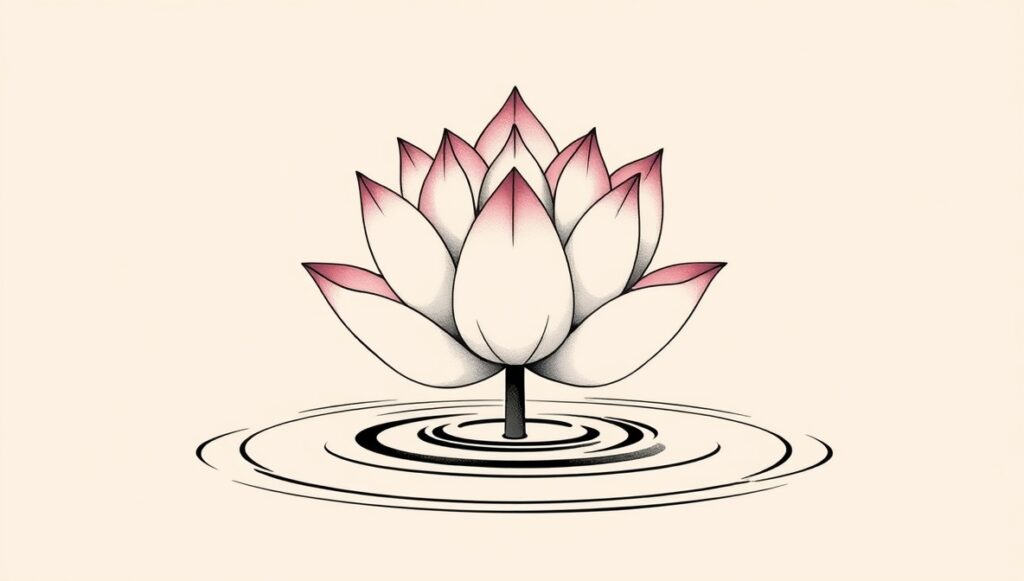
A lotus flower is often associated with serious spiritual and personal themes, but some wearers prefer a playful interpretation.
Example 1: “Growing through the mud, one petal at a time.”
Example 2: “A little muddy, but still blooming.”
Example 3: “Proof that even my life has a glow-up.”
These captions are modern, humorous interpretations rather than traditional religious meanings. They are best suited to casual conversations or social media posts where a lighthearted tone feels appropriate.
Comparison With Similar Tattoo Designs
The lotus is often compared with other flowers and spiritual symbols because many share themes of growth, beauty, or renewal. However, their traditional associations can differ.
| Tattoo design | Common meaning | Difference from the lotus |
|---|---|---|
| Lotus flower | Spiritual growth, purity, renewal, and resilience | Strong associations with Buddhist and Hindu symbolism |
| Rose | Love, beauty, passion, or remembrance | Often emphasizes relationships and emotions |
| Butterfly | Transformation, freedom, and new beginnings | Focuses on metamorphosis and personal change |
| Cherry blossom | Impermanence, beauty, and the passing of time | Often highlights life’s temporary nature |
| Lily | Purity, renewal, and remembrance | Meanings vary by culture and flower type |
| Mandala | Balance, unity, and spiritual reflection | Uses geometric patterns rather than a flower as its central image |
| Phoenix | Rebirth, survival, and renewal | Emphasizes rising after destruction or defeat |
| Water lily | Beauty, tranquility, and cultural or spiritual symbolism | A related aquatic flower with distinct botanical and cultural associations |
Lotus Flower vs. Rose Tattoo
A rose tattoo often symbolizes romantic love, passion, devotion, or remembrance. A lotus tattoo more frequently emphasizes spiritual growth, resilience, and inner development.
Both flowers can represent love or personal transformation, but the lotus has especially strong associations with Asian spiritual traditions.
Lotus Flower vs. Butterfly Tattoo
A butterfly tattoo commonly symbolizes transformation because of the insect’s life cycle from caterpillar to adult butterfly.
A lotus also represents transformation, but its symbolism often emphasizes rising above difficult surroundings and developing inner strength.
A person who wants to celebrate a major life change might choose either design, depending on which image better reflects their personal story.
Lotus Flower vs. Mandala Tattoo
A mandala is a geometric arrangement of shapes that can represent wholeness, balance, and spiritual reflection in various religious and cultural contexts.
A lotus is a flower with its own distinct natural and religious associations. The two designs can also be combined, with the lotus representing growth and the mandala adding symmetry or a sense of balance.
Alternate Meanings of Lotus Flower Tattoos
Although purity, growth, and renewal are common interpretations, the lotus can communicate different ideas depending on the wearer and design.
Rebirth and Renewal
The lotus may symbolize leaving the past behind and approaching life with renewed purpose. It can be especially meaningful after a major transition.
Strength Through Adversity
The flower’s growth in muddy water can represent perseverance. Some people use it to acknowledge their struggles without allowing those experiences to define them.
Detachment and Spiritual Awareness
In certain spiritual contexts, the lotus can suggest remaining grounded without becoming overwhelmed by material concerns or external distractions.
This meaning is particularly relevant to some Buddhist and Hindu interpretations, though the precise teachings differ across traditions.
Love and Compassion
A lotus may symbolize a desire to approach others with greater kindness and understanding. This interpretation can overlap with spiritual development and emotional maturity.
Beauty and Individuality
Some people choose a lotus primarily for its shape and elegance. Aesthetic appreciation is a valid personal reason for choosing a tattoo, even when the design has broader cultural associations.
Color-Related Meanings
Different lotus colors are often assigned symbolic interpretations in modern tattoo guides, but these meanings are not universal.
| Lotus color | Common modern interpretation |
|---|---|
| Pink | Love, compassion, and spiritual significance |
| White | Purity, clarity, and spiritual awareness |
| Blue | Wisdom, knowledge, and self-control |
| Purple | Spirituality, mystery, or personal reflection |
| Red | Love, passion, and compassion |
| Black | Strength, individuality, or personal transformation |
These associations are useful starting points rather than fixed rules. Color symbolism can differ between cultures, religious traditions, and contemporary tattoo artists.
Professional or Polite Alternatives for Describing a Lotus Tattoo
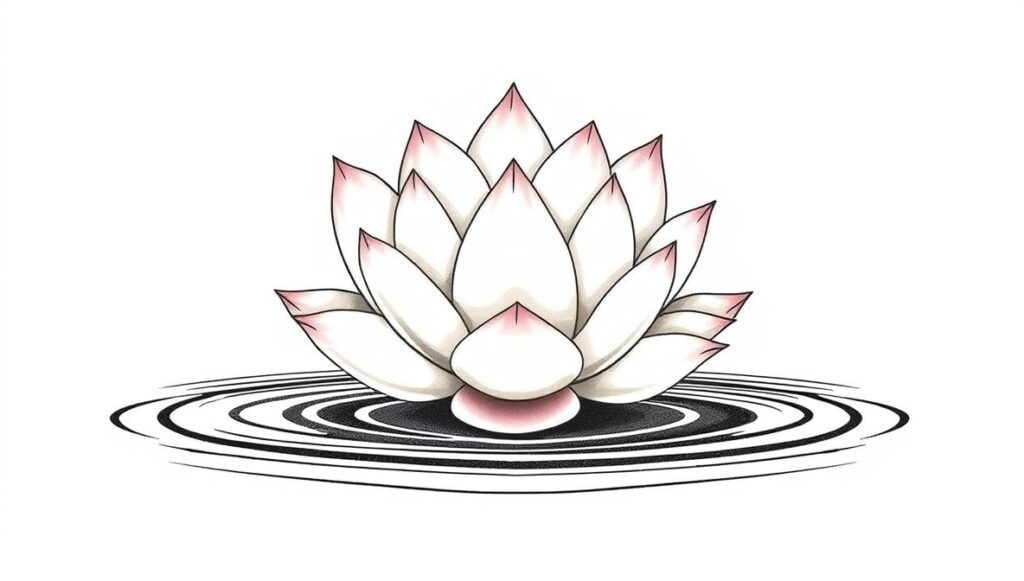
If someone asks what your tattoo means, you can explain it in a way that matches the situation.
Read This 444 Tattoo Meaning: Symbolism, Spiritual Signs, and Powerful Design Ideas
| Situation | Suggested explanation |
|---|---|
| Casual conversation | “It reminds me to keep growing through life’s challenges.” |
| Spiritual discussion | “For me, it represents spiritual growth and inner awareness.” |
| Formal setting | “The design is inspired by the lotus’s traditional symbolism of renewal and purity.” |
| Personal conversation | “It represents a fresh start and the progress I’ve made.” |
| Artistic discussion | “I like the lotus because its natural shape combines elegance with meaningful symbolism.” |
| Private setting | “It has a personal meaning that I prefer to keep to myself.” |
You do not need to explain every personal detail behind your tattoo. A brief answer can communicate its significance while keeping your private experiences private.
If the design is inspired by a particular religious tradition, it is also helpful to distinguish your personal interpretation from the symbol’s traditional meaning.
Common Mistakes When Interpreting Lotus Flower Tattoos
Understanding lotus symbolism requires attention to cultural context, color, and individual meaning. These are some common mistakes to avoid.
1. Assuming every lotus tattoo has exactly the same meaning
One person may associate the lotus with Buddhism, while another sees it as a symbol of recovery or a new beginning. Personal interpretations can differ.
2. Treating color meanings as universal
A pink lotus is not automatically associated with the same meaning in every tradition. Color symbolism should be treated as context-dependent.
3. Confusing the lotus with the water lily
The flowers may look similar, but they are botanically distinct. Some historical artworks also depict water lilies rather than the Asian sacred lotus.
4. Assuming the lotus is exclusively Buddhist
The lotus is significant in both Buddhist and Hindu traditions and has also appeared in other historical cultures. Its symbolism is not limited to a single religion.
5. Ignoring cultural and religious context
A lotus tattoo can be an aesthetic choice, but it may also carry sacred significance. Understanding its background helps people make informed design decisions.
6. Assuming a lotus tattoo always represents a difficult past
Resilience is a common modern interpretation, but a lotus can also symbolize devotion, purity, beauty, or spiritual aspiration without referring to personal hardship.
7. Choosing an overly complicated design for a small tattoo
Intricate petals and fine details may be difficult to preserve in a very small design. Discuss the desired size and level of detail with an experienced tattoo artist.
Quick Tips for Choosing a Lotus Flower Tattoo
If you are planning to get a lotus tattoo, these practical tips can help you create a design that suits your intentions.
- Decide what the flower means to you. Consider whether you want to express resilience, spiritual growth, renewal, or inner peace.
- Research the cultural background. If the design draws on Buddhist or Hindu imagery, learn about its traditional associations.
- Choose your preferred style. Fine-line, minimalist, geometric, watercolor, and detailed floral designs can all work well.
- Consider color carefully. Select a palette that suits your aesthetic and the symbolism you want to emphasize.
- Think about the placement. Wrists and ankles suit small designs, while the back or forearm can accommodate more detail.
- Check the design at different sizes. A tattoo should remain recognizable and legible as it heals and ages.
- Discuss your ideas with your artist. Share reference images and explain the meaning you want to communicate.
- Follow professional aftercare guidance. Choose a reputable studio and follow the artist’s instructions to support proper healing.
A meaningful lotus tattoo does not have to be large or elaborate. Even a simple outline can serve as a powerful personal reminder when its symbolism resonates with the wearer.
FAQ: Lotus Flower Tattoo Meaning
1. What does a lotus flower tattoo mean?
A lotus flower tattoo commonly symbolizes spiritual growth, purity, resilience, rebirth, and new beginnings. Its association with growing from muddy water makes it a popular representation of overcoming challenges and continuing to develop.
2. What does a lotus flower tattoo mean spiritually?
Spiritually, the lotus can represent awakening, wisdom, inner peace, and the development of a deeper understanding of life. In Buddhist and Hindu traditions, it also has specific religious associations that vary by context.
3. Is a lotus flower tattoo a symbol of strength?
Yes, many people interpret the lotus as a symbol of resilience and inner strength. Its ability to grow in muddy water provides a metaphor for remaining hopeful and continuing to grow through difficult circumstances.
4. What does a lotus flower tattoo mean for a woman?
A lotus tattoo can represent growth, independence, beauty, resilience, self-love, or spiritual development. These meanings are not exclusive to women, and the significance ultimately depends on the individual wearing it.
5. What does a pink lotus flower tattoo mean?
A pink lotus is often associated with compassion, love, spiritual significance, and devotion. In some Buddhist contexts, the pink lotus has a particularly important association with the Buddha. Exact interpretations depend on the tradition and design.
6. What does a white lotus flower tattoo symbolize?
A white lotus is commonly associated with purity, clarity, and spiritual awareness. In some Buddhist traditions, it also represents qualities connected with spiritual development and awakening.
7. What does a lotus flower tattoo mean in Buddhism?
In Buddhism, the lotus commonly symbolizes purity, spiritual growth, and enlightenment. Its emergence from muddy water illustrates how wisdom and awakening can develop despite the difficulties and distractions of ordinary life.
8. What does a lotus flower tattoo mean in Hinduism?
In Hindu traditions, the lotus is associated with purity, divinity, beauty, creation, and spiritual significance. It appears in imagery connected with deities such as Lakshmi and Brahma, although its precise meaning varies by context.
9. Where is the best place to get a lotus flower tattoo?
Popular placements include the wrist, forearm, ankle, shoulder, spine, chest, and back. The best location depends on the design’s size, the level of detail, your preferences, and how visible you want the tattoo to be.
10. Does a lotus flower tattoo represent a new beginning?
Yes, a lotus tattoo often represents renewal, rebirth, and the start of a new chapter. People may choose it to mark personal growth, recovery, or a meaningful change in their lives.
Conclusion
The lotus flower tattoo meaning combines spiritual growth, purity, resilience, and the possibility of new beginnings. Its ability to bloom above muddy water makes it a powerful symbol of personal transformation, while its historical significance in Buddhist and Hindu traditions gives it additional cultural and spiritual depth.
For some people, a lotus represents enlightenment and religious devotion. For others, it is a reminder of the strength required to overcome challenges, maintain inner peace, and embrace change.
When choosing a lotus tattoo, consider the symbolism, cultural background, color, style, and placement. Take time to select a design that reflects your personal values and consult a skilled tattoo artist about the details.
Ultimately, the most meaningful lotus tattoo is one that reminds you of what matters most, whether that is spiritual awareness, personal growth, or the courage to keep blooming through life’s challenges.